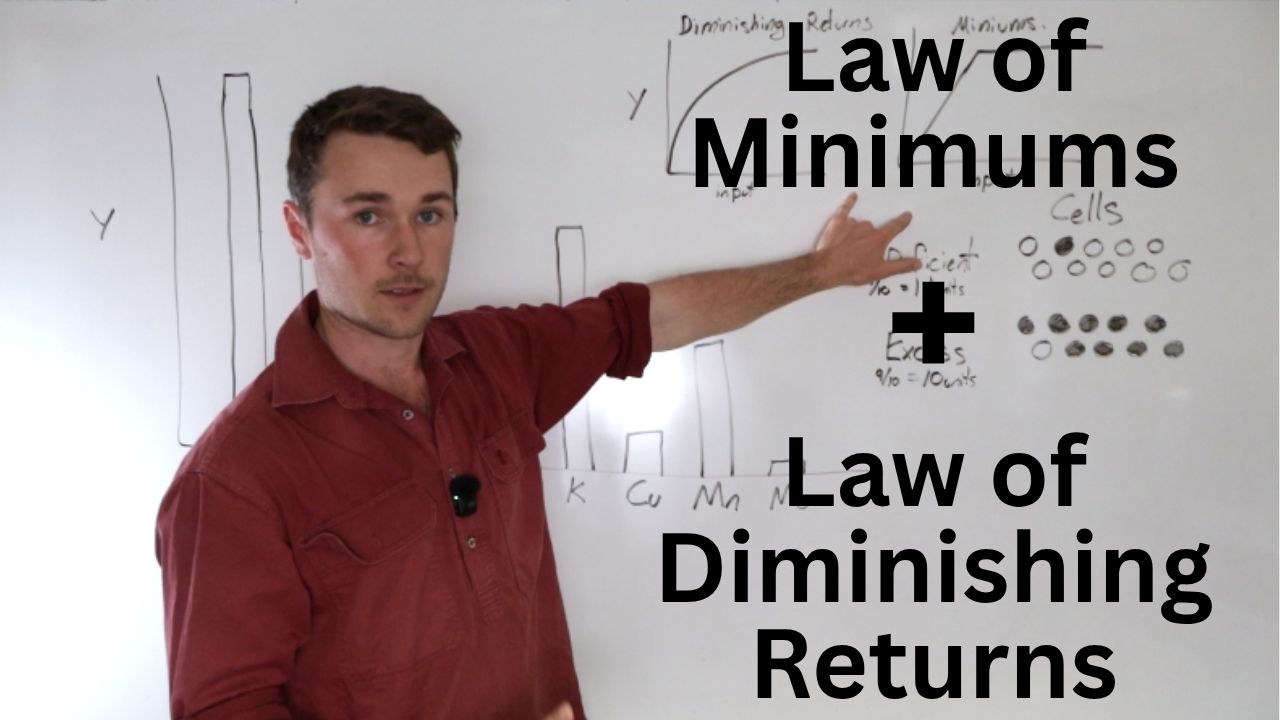
Understanding your soil’s reduction and oxidation (REDOX) potential is essential for optimizing plant health and unlocking bound nutrients. While most farmers are familiar with pH, Redox serves as an equally critical metric for driving soil quality and crop performance.
First watch the video below from our Agresol Youtube channel.
What is REDOX?
At a chemical level, REDOX measures the transfer and concentration of electrons. A simple way to compare it to standard soil testing is:
pH measures the concentration of hydrogen ions.
pe (or Eh) measures the negative log of electron concentration.
Oxidation (Loss of Electrons): Associated with oxygen-rich environments, turning minerals into oxidized forms like rust.
Reduction (Gain of Electrons): Associated with electron-rich environments, keeping minerals in a reduced state.
How REDOX Dictates Nutrient Availability
A standard soil test may display abundant iron or manganese, yet crops can still show severe deficiencies in the field. This mismatch occurs because plants primarily utilize reduced mineral forms, such as ferrous iron (Fe2+), rather than oxidized ferric iron (Fe3+).
Ideal Soil Target: Soils perform best when slightly reduced and slightly acidic.
Target pH Range: 6.0 to 6.5 (up to 7.0).
Target REDOX Range: pe of 6.5 to 7.5, or an Eh reading of 400 to 450mV}.
Typical Field Range: Most agricultural soils measure between 300mV and 900mV. Highly reduced soils (<300mV) reflect waterlogged, anaerobic conditions.
Plant Health and Disease Pressure
Research demonstrates that stressed crops tend to exhibit oxidized sap, whereas healthy plants remain slightly reduced. Specific pathogen groups thrive at distinct pH and REDOX parameters:
Fungal Pathogens: Prefer acidic, highly oxidized environments.
Insects: Prefer slightly acidic, oxidized conditions.
Bacteria: Tend to occur near neutral REDOX states.
Viruses: Prefer alkaline, reduced conditions.
A combined index score (pe + pH) between 7.0 and 10.5 generally indicates optimal plant resilience.
Tactics to Shift Your System Toward a Reduced State
Maximize Photosynthesis: Photosynthesis is naturally a reducing reaction. Driving photosynthetic capacity is the single most effective way to reduce plant sap and soil environments.
Shift Nitrogen Forms: Ammonium-based (NH4+) fertilisers promote reduction and slight sap acidification, whereas nitrate-based (NO3-) fertilisers act as strong oxidizers. Minimize nitrates in foliar programs unless strategically seeking early-stage tillering or hormonal responses.
Build Soil Organic Matter: Organic matter buffers REDOX potential, a process known as poising, keeping soil balanced near 400mV.
Protect Soil Aggregates: Well-formed macro-aggregates maintain an oxidized outer shell for gas exchange while preserving a reduced interior core, enabling biological nitrogen fixation. Excessive tillage destroys these aggregates and introduces surplus oxygen, oxidizing the profile.
Buffer Foliar Sprays: Adding fulvic acid or beneficial anaerobes (such as fermented Lactobacillus) to foliar applications poises the solution around 400mV, preventing minerals like iron sulfate from oxidizing before plant uptake.
Manage Oxidizing Inputs: Lime, sodium-heavy soils, excessive tillage, and herbicides (e.g., glyphosate, paraquat) induce oxidative stress on plants and soil profiles.
Measuring REDOX in the Field
Handheld ORP (REDOX) meters priced around 400 can measure sap and soil status alongside pH, EC, and refractometers. Because readings shift rapidly with moisture changes, REDOX data should be treated as a directional guide for management decisions rather than an exact prescription.