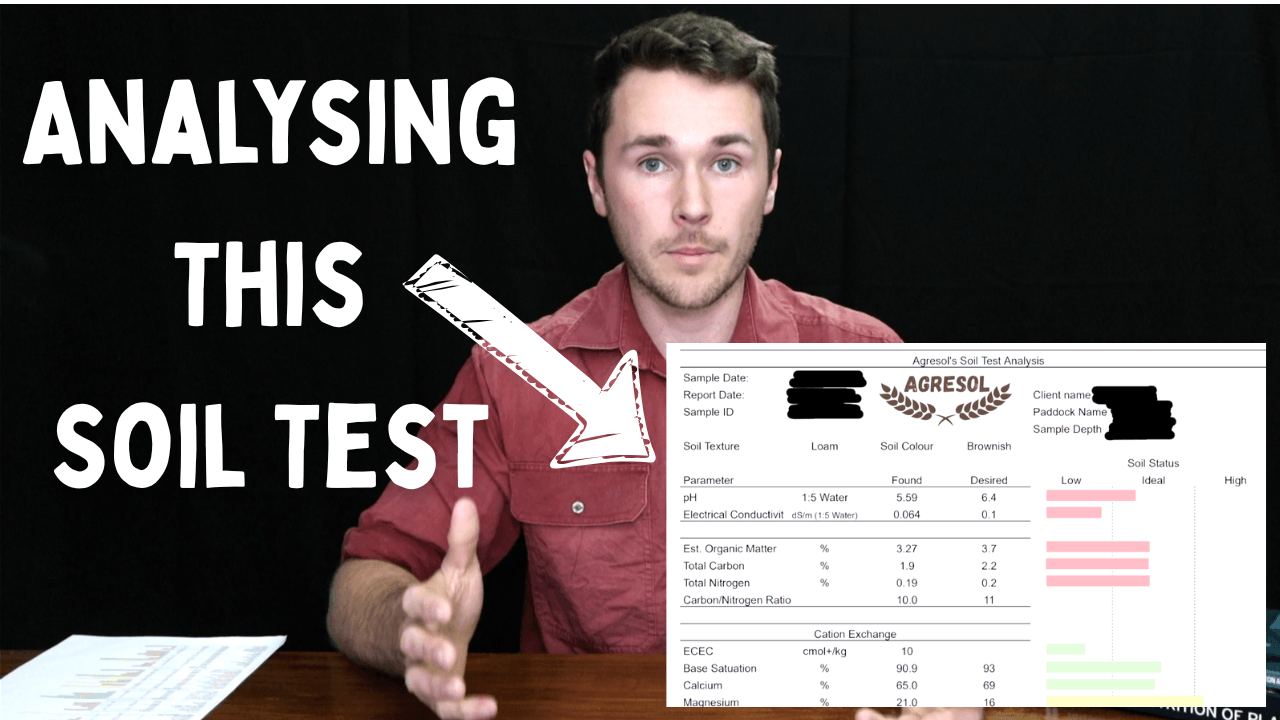
Interpreting a pasture soil test is essential for identifying the main limiting factors constraining productivity. While conventional agronomy often focuses on synthetic inputs and biological approaches emphasize soil life, an effective strategy balances biological activity with targeted mineral applications. By assessing both immediately available nutrients and the total reserves in your parent material, you can optimize pasture growth while building long-term soil health.
Baseline Soil Parameters
When evaluating results, begin by examining fundamental parameters such as pH, organic matter, and cation balance:
Soil pH: A water extraction pH above 5.5 (or calcium chloride above 4.8) indicates that pH is not a major limiting factor. Below 5.5, soil acidity begins to restrict nutrient availability.
Organic Matter & Cation Exchange: Check base saturation for severe imbalances. Exchangeable sodium above 6% or exchangeable aluminum above 3% signal potential toxicity issues.
Identifying Key Nutrient Deficiencies
To determine your primary limiting factors, evaluate both available nutrition and total parent material reserves across key macro and trace elements:
- Phosphorus (Available vs. Total): Available phosphorus (e.g., Bray 1) targets around 28 ppm to achieve 90–95% yield potential. However, reports often show low available levels (e.g., 3.4 ppm) despite massive total reserves (e.g., 500 ppm total P, equivalent to ~6.5 tonnes of superphosphate per hectare in the top 10 cm). Bridging this gap requires combining targeted early-season foliar applications with biological unlocking driven by pasture photosynthesis and structured grazing recovery periods.
- Potassium: Total reserves should ideally exceed 200 ppm. If total potassium is near critical thresholds (e.g., 160 ppm), background reserves are lacking, making capital applications (such as Sulfate of Potash) necessary to support legume and pasture performance.
- Copper: When parent material reserves are low, biological cycling cannot fulfill plant needs. Small capital applications of copper sulfate help build reserves, preventing deficiency signs in livestock such as coat color bleaching.
- Boron & Selenium: Boron is critical for plant cell structure and foliage health. Selenium, often at minimum detectable limits in lab analyses, is vital for livestock health and can be supplied via soil applications or direct animal supplementation.
Summary & Action Plan
Analyzing your data allows you to prioritize inputs based on economic return and biological potential:
- Prioritize limiting factors: Address phosphorus availability and reserve shortages first.
- Combine biology and nutrition: Use strategic foliar applications alongside grazing management to stimulate biological activity.
Capital applications: Make targeted soil additions for deficient minerals lacking in parent reserves (such as potassium, copper, and boron).