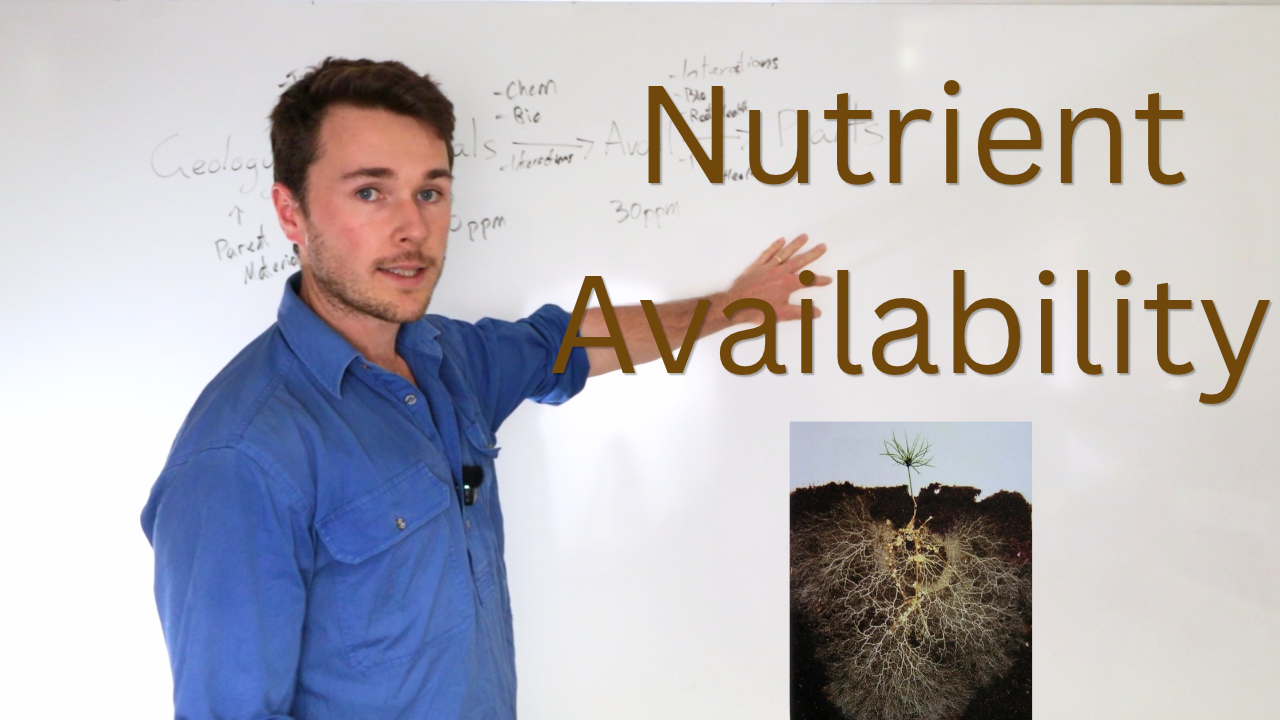
A common shortcoming in standard agricultural nutrition programs is relying on a single, isolated soil test. Standard soil tests only give you a static snapshot of available chemistry at one moment in time, missing the bigger picture of how nutrients move. Soil nutrition isn’t just a static pool it’s a continuous flow moving through physical, biological, and chemical transitions.
First watch the video below from our Agresol Youtube channel.
To accurately diagnose soil performance and stop wasting money on unnecessary inputs, we need to track nutrition across four main stages:
- Geology & Parent Material: The foundational mineral supply inherited directly from the underlying rock.
- Total Soil Minerals: The full mineral pool present in your soil matrix, including both bound reserves and past input applications.
- Available Minerals: The soluble fraction of those total minerals that your plant roots can actually reach and absorb.
- Plant Uptake: The actual assimilation of those available minerals directly into plant tissue.
When you understand where the bottleneck is occurring along these four stages, you can pinpoint the exact mechanism holding back crop performance and fix it.
Geology & Parent Material: The Baseline
Your geological parent material sets the upper ceiling for minerals in your soil profile. Simply put, if a primary mineral isn’t in the underlying rock, it can’t naturally weather into your soil’s total or available mineral pools.
This baseline is especially critical here in Australia, where our soils are geologically ancient, heavily weathered, and naturally low in nutrients. Unlike younger agricultural soils in parts of North America, which are frequently rich in volcanic material or heavy, unweathered clays, Australian parent materials like sandstone naturally lack essential macronutrients and trace elements. Assuming native soils hold massive, locked-up reserves of every mineral just doesn’t hold true across older landscapes.
To map out your farm’s natural baseline, take a look at regional geological datasets. Online tools like the Geoscience Portal let you explore parent material types and see how spatial mineral variations play out across your land.
Total Soil Minerals: What’s Present vs. What Accumulated
A total soil mineral test measures the absolute quantity of minerals bound within the soil, regardless of whether they are soluble or biologically accessible right now. What sits between that underlying geology and your current total reserves depends on physical, environmental, and historical factors:
- Soil Age & Weathering: Younger soils hold on to more of their original parent nutrition, whereas ancient soils weathered over immense periods lose baseline minerals.
- Topography & Slope: Landscape position plays a huge role. Sloped ground loses minerals to surface erosion and runoff, while lower depositional areas accumulate topsoil and total nutrients.
- Climate & Leaching: High-rainfall environments speed up parent material weathering and drive nutrient leaching, directly altering total soil mineral levels.
- Management History: Past management heavily alters total mineral pools. Intensive stocking (like dairy night paddocks loaded with manure) or historic superphosphate applications build total reserves far above natural baseline levels.
Mineral Availability Processes: Unlocking the Totals
Having high total mineral numbers doesn’t mean your plants are actually fed. Unlocking mineral reserves into plant-available forms comes down to key chemical and biological processes:
- Chemical: Climate drivers like moisture and warm temperatures accelerate mineral breakdown, which is why mineralization rates spike during summer compared to winter.
- Biological: Soil microbes, fungi, and root exudates work together to solubilize bound minerals. For example, your soil might contain 800 ppm of total phosphorus, but because of biological and chemical limits, only 30 ppm is actually plant-available. Active soil biology is what bridges that gap.
- Soil Chemistry Constraints: Unfavorable chemistry can lock available minerals back up. Low soil pH mixed with high active aluminum and iron will rapidly tie up free orthophosphates, turning plant-available phosphorus right back into insoluble compounds.
Plant Uptake & Identifying Constraints
Even when nutrients are soluble and present in the soil solution, plant uptake isn’t guaranteed. Biological and environmental restrictions can block mineral transfer into crop roots:
- Nutrient & Mineral Interactions: Minerals interact in beneficial or antagonistic ways. Having adequate zinc supports efficient phosphorus uptake, whereas excessive levels of certain cations block uptake of others.
- Root Health & Mycorrhizal Associations: Root architecture determines accessible soil volume. Shallow or damaged roots limit access to nutrients, while healthy mycorrhizal fungi networks expand the root surface area for absorption.
- Plant Growth Stage: Nutritional demands shift over the crop lifecycle. Plants entering reproductive stages change their metabolic rates and root exudate profiles, altering their ability to draw minerals from the rhizosphere.
Finding the System’s Limiting Factors
Comparing datasets across parent geology, total minerals, available nutrients, and plant tissue tests reveals exactly where the system is getting stuck. If total minerals are high but availability is low, your bottleneck is biological or chemical release. If availability is high but tissue levels remain low, the issue stems from root health, soil chemistry interactions, or plant stress.
Conclusion
Managing soil fertility effectively means treating plant nutrition as a continuous four-stage flow rather than relying on a single soil test. By auditing geology, total reserves, available nutrients, and plant tissue levels, you can pinpoint the real constraint on your property. This diagnostic approach makes sure every dollar is invested wisely, whether into biological stimulants, soil amendments, or targeted mineral applications to optimize nutrient flow from parent material all the way into the plant.