For Australian primary producers, water availability remains the single greatest limiting factor to agricultural production. Water is essential not only as a primary reactant in photosynthesis but also as the medium for transpiration, which pulls vital mineral nutrients from the soil up into the plant architecture. Consequently, improving water use efficiency directly translates to improved drought tolerance, enhanced crop resilience, and higher overall yields.
A central driver of a plant’s water retention capability is its Brix level. Brix is the concentration of dissolved solutes and sugars in the plant sap. Higher Brix readings reflect a plant that is efficiently capturing solar energy, synthesizing carbohydrates, and maintaining hydration even under harsh environmental conditions.
First watch the video below from our YouTube channel:
Understanding Brix and Plant Health
Brix is measured using an optical refractometer to determine the concentration of dissolved solids, primarily sucrose, in plant sap. Mathematically, one degree Brix corresponds to approximately 1 gram of sucrose per 100 milliliters of sap, or a 1% sugar concentration. A plant measuring 10 Brix possesses double the concentration of dissolved sugars compared to a plant measuring 5 Brix.
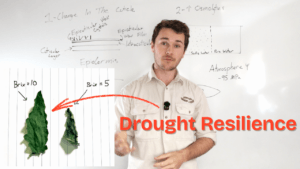
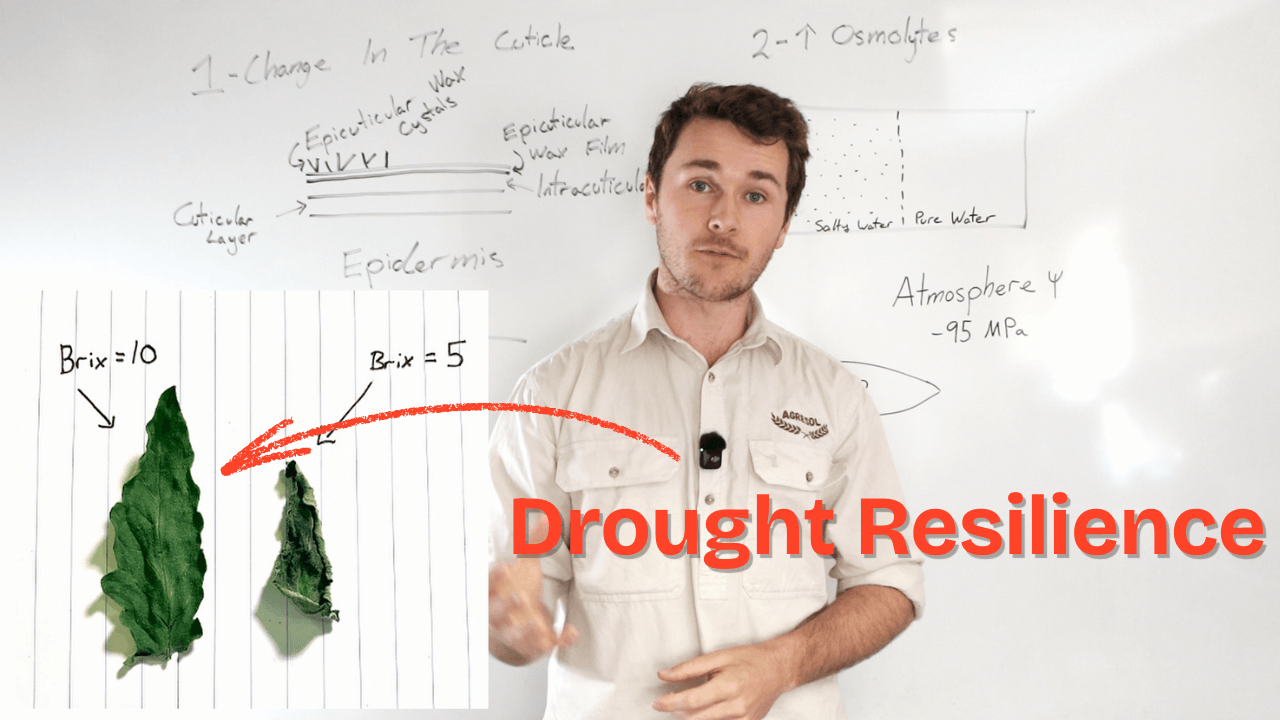
This difference in Brix levels is clearly demonstrated in simple practical observations. For example, comparing two tomato leaves, one with a Brix reading of 10 and another with a Brix reading of 5, reveals significant structural and physiological differences after 24 hours of drying. While the leaf with 5 Brix becomes completely crispy and desiccated, the leaf with 10 Brix maintains substantially more moisture and remains soft. This striking contrast highlights how higher Brix levels contribute to superior water retention and stress resilience.
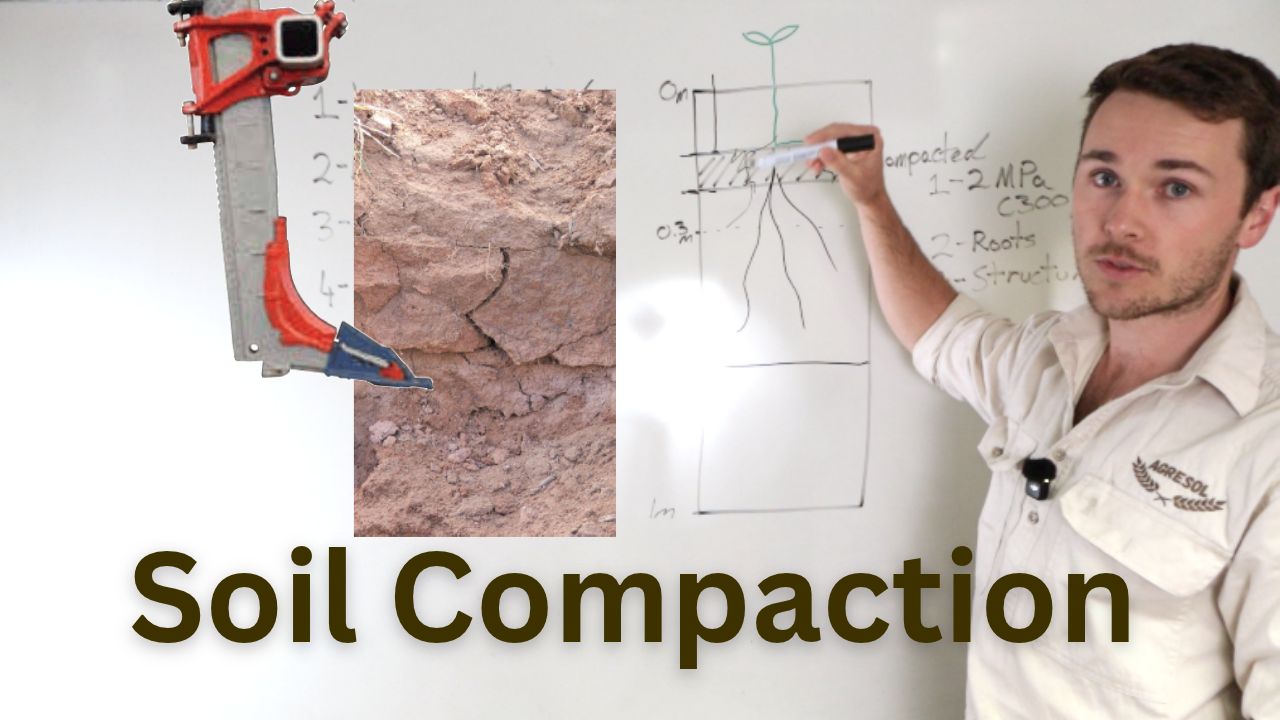
The root cause of variance in sap concentration often lies directly beneath the plant. High Brix crops typically originate from vibrant, biologically active soil characterized by well-developed structure, high earthworm activity, and rich organic carbon content. Conversely, lower Brix crops often stem from soils with compromised structure and reduced biological activity.
While environmental stresses such as temporary drought can artificially concentrate sap solutes, in well-watered conditions, Brix serves as a reliable proxy for overall plant health and photosynthetic capacity. A higher Brix reading reflects a plant that is thriving in a supportive soil ecosystem and effectively utilizing resources to protect itself against desiccation.
Two Core Mechanisms
The remarkable ability of high-Brix plants to retain moisture and withstand desiccation can be explained through two primary physiological mechanisms:
Mechanism 1: Cuticle Composition and Waxy Layers
The leaf cuticle is a complex, waxy outer protective layer consisting of multiple sub-layers, including epicuticular wax crystals, wax films, and underlying epidermal layers. Beyond providing defense against pests, diseases, and harsh ultraviolet radiation, the cuticle acts as the leaf’s primary waterproof barrier to limit non-stomatal transpiration.
Scientific research indicates that water retention is governed less by the sheer thickness of the cuticle and more by the qualitative chemical composition of the internal waxes. Plants with superior health and abundant carbohydrate reserves possess the metabolic energy required to synthesize complex, highly effective wax formulations. These tailored wax structures can dramatically decrease water permeability, enabling high Brix foliage to retain moisture far longer under drying conditions.
Mechanism 2: Osmotic Potential and Pressure
Water movement through soil, plants, and the atmosphere is driven by osmotic potential. Water naturally moves from areas of higher water potential (less dissolved solutes) toward areas of lower water potential (higher concentration of solutes).
Because sucrose comprises up to 90% of the total dissolved solutes in plant sap, doubling the Brix level significantly lowers the leaf’s osmotic potential (making it more negative). This shift alters physiological dynamics in two important ways:
Increased Root Pull Power: A more negative osmotic potential in the leaves creates a stronger suction gradient, drawing water more effectively from drying soils into the roots and up through the vascular tissue.
Reduced Atmospheric Loss Gradient: Lowering the water potential inside the leaf reduces the steepness of the gradient driving moisture loss into the surrounding atmosphere, effectively slowing down transpiration and desiccation.
Why Foliar Sugar is Only a Temporary Fix
A common short-term practice is applying foliar carbohydrates, such as molasses at rates of 1 to 5 L/ha. While foliar sugars can provide temporary benefits, such as assisting in ammonium metabolism or improving spray droplet adhesion. This does not address the fundamental driver of plant performance.
To put this in perspective, a vegetative pasture or wheat crop producing 50 kg of dry matter per hectare daily generates approximately 200 kg of natural sugars and Photosynthates per day (assuming ~25% of total Photosynthates are allocated to above-ground biomass). Applying a few kilograms of exogenous sugar per hectare cannot match the massive daily sugar output of an actively photosynthesizing crop. Sustainable Brix management requires boosting the plant’s intrinsic photosynthetic capacity rather than relying on external sugar applications.
Strategies for Increasing Photosynthetic Efficiency
Optimizing photosynthetic efficiency on a per-leaf basis relies on targeted crop nutrition, canopy management, and stress mitigation:
Targeted Nutritional Balance: Ensure balanced availability of critical photosynthetic elements:
Nitrogen (N): Essential for chlorophyll construction; must be balanced to prevent excess vegetative dilution.
Phosphorus (P): Crucial for energy transfer (ATP) and metabolic pathways.
Magnesium (Mg): The central atom in the chlorophyll molecule.
Manganese (Mn): Required for water hydrolysis (splitting the water molecule during photosynthesis).
Iron (Fe): Necessary for chlorophyll synthesis and electron transport.
Copper (Cu): Vital for electron transport in photosystem reactions.
Canopy & Grazing Management: In pastoral systems, adaptive grazing practices maintain sufficient leaf area (“solar panels”) to maximize total light interception and carbohydrate synthesis across the landscape.
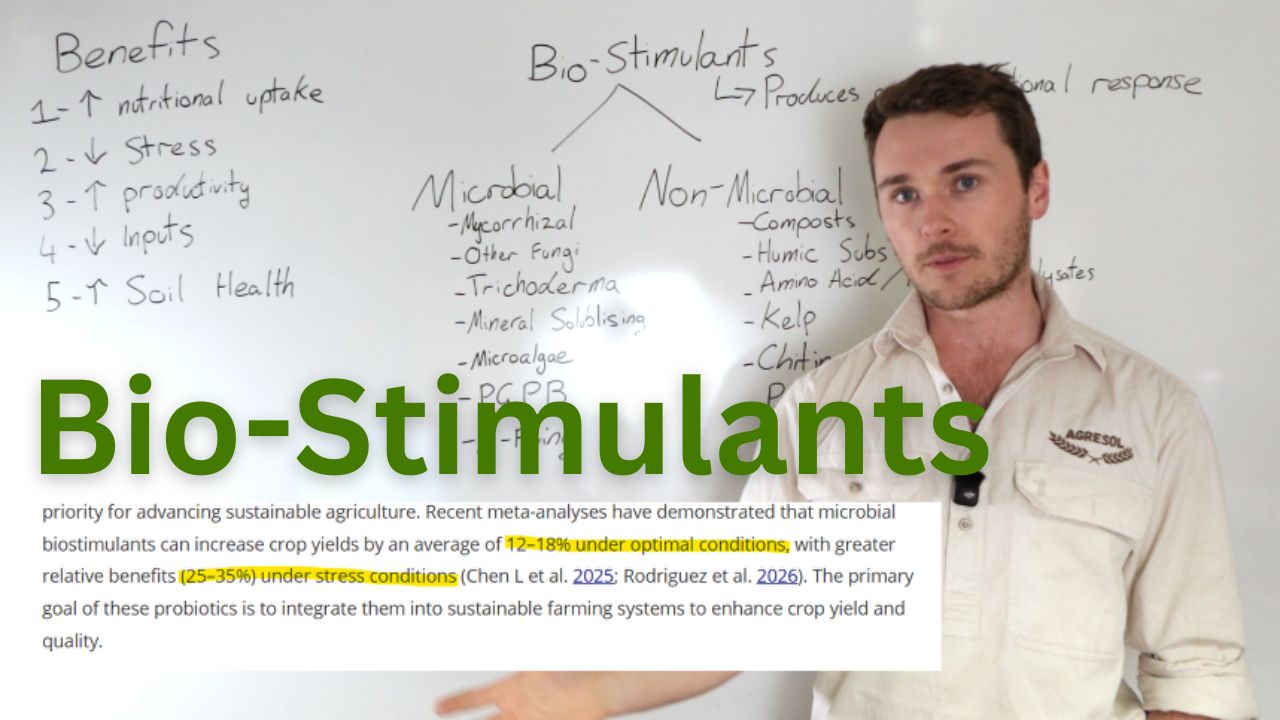
Biostimulants: Incorporating fulvic acid, kelp extracts, and amino acids helps alleviate environmental stress, stimulates hormonal pathways, and enhances nutrient uptake through both soil and foliar delivery channels.