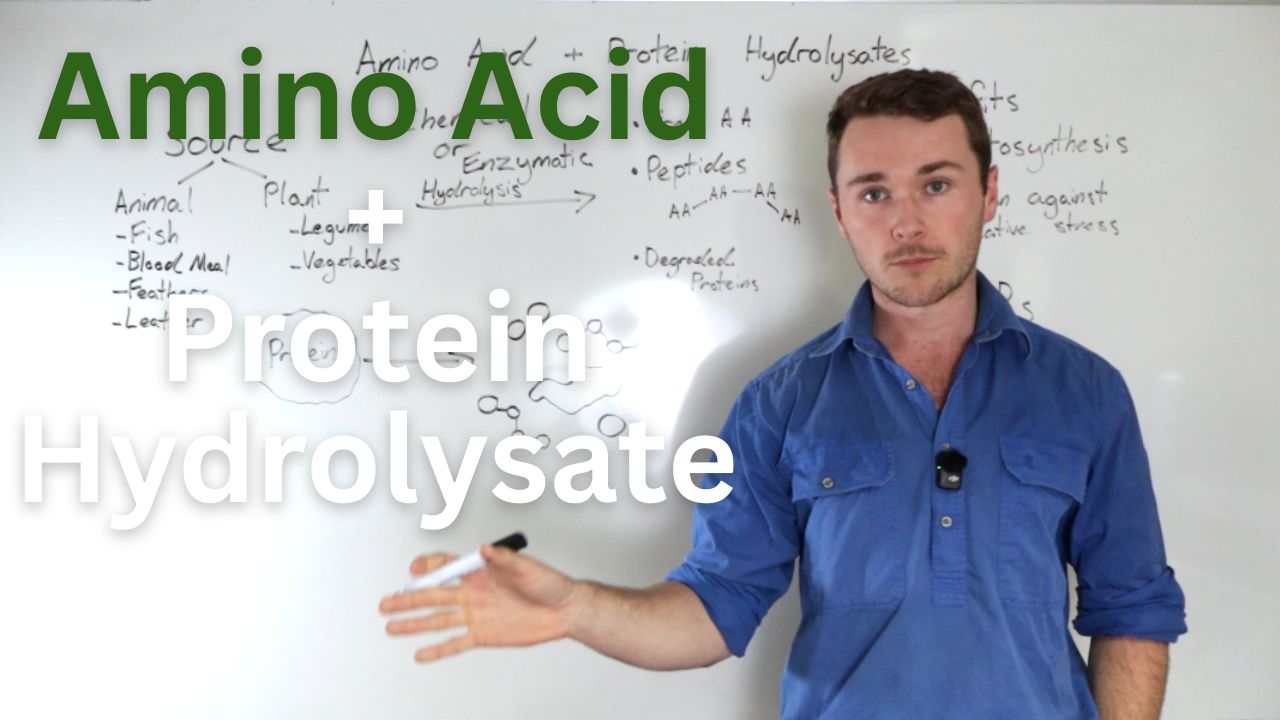
Integrating an amino acid or protein hydrolysate product into your spray program offers a powerful biological signal to improve crop health, stress tolerance, and nutrient efficiency. However, capitalizing on these inputs requires understanding how a protein hydrolysate is manufactured, how amino acid signaling functions in the plant, and how to apply them for maximum return on investment.
First watch the video below from our Agresol Youtube channel.
Understanding Protein Hydrolysate Sources and Manufacturing
A protein hydrolysate is produced by breaking down complex protein sources—typically industrial organic byproducts like fish waste (where 30–40% of heads and guts are otherwise discarded), blood meal, feathers, leather, or plant sources like legumes and vegetable waste.
To turn whole proteins into plant-available compounds, raw materials are ground down to increase surface area and processed through hydrolysis (using water to cleave chemical bonds). This process breaks large proteins down into three key components: free amino acid molecules, peptides (short chains of an amino acid group), and semi-degraded proteins.
Enzymatic vs. Chemical Hydrolysis
The method used to extract a protein hydrolysate significantly influences its chemical profile and agronomic performance:
| Feature | Enzymatic Hydrolysis | Chemical Hydrolysis |
| Process | Uses biological enzymes or microbes to gently digest proteins. | Uses harsh chemical acids or bases to degrade proteins. |
| Amino Acid Integrity | Preserves all amino acid structures without damaging sensitive compounds. | Destroys several key amino acid structures during processing. |
| Compound Profile | Yields a higher proportion of intact peptides and semi-degraded proteins with lower free amino acid ratios. | Yields higher concentrations of targeted, individual free amino acid molecules. |
| Best Agronomic Use | Preferred for broad-spectrum biostimulant and signaling responses. | Preferred when specifically targeting pure free amino acid applications. |
Biostimulants vs. Nutrition: The Real ROI of an Amino Acid Application
A common misconception is treating a protein hydrolysate as a primary nitrogen (N) fertilizer. While these products typically contain 5% to 8% nitrogen, standard application rates deliver only 0.12 to 0.16 kg N/ha. In comparison, standard foliar urea delivers 5 to 10 kg N/ha—roughly 50 times more nitrogen at a fraction of the cost.
At product costs around $4 to $9 per liter, applying a protein hydrolysate purely for nitrogen units is economically unfeasible. Instead, their primary value comes from non-nutritional biostimulant signaling.
Key Modes of Action
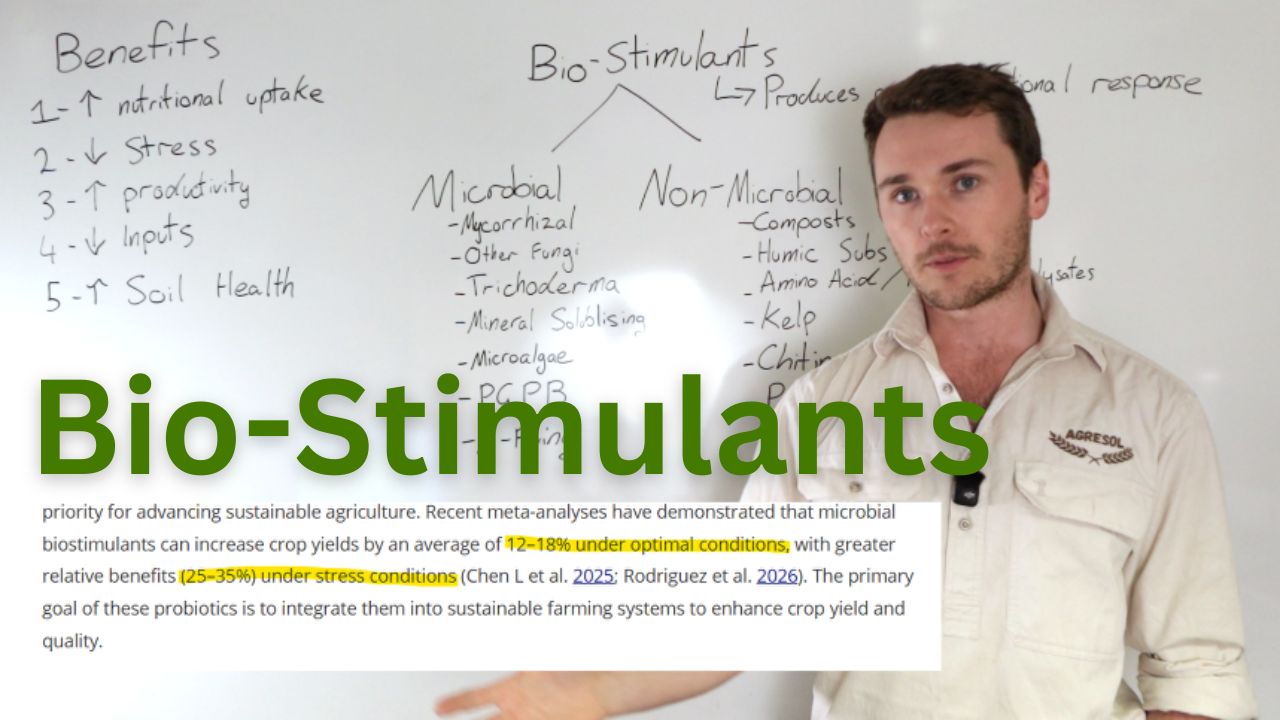
Enhanced Photosynthesis & Stress Resistance: A foliar amino acid spray signals plants to increase photosynthetic pigment production and rate, driving biomass and yield increases typically observed between 10% and 20% in research reviews. Simultaneously, it boosts protection against oxidative stress caused by drought, salinity, and pest pressure.
Accelerated Nitrogen Metabolism: Applying an amino acid biostimulant stimulates the conversion of inorganic nitrogen backlogs (such as nitrates or ammonium accumulated in sap) into functional plant proteins.
Trace Mineral Chelation: Free amino acid compounds act as natural chelating agents. Research demonstrates that tank-mixing zinc sulfate with an amino acid complex increases plant zinc uptake by 14% compared to applying zinc sulfate alone.
Field Application Strategy: Rate, Timing, and Placement
To achieve the highest return on investment from your protein hydrolysate and amino acid products, follow these field guidelines:
Application Rate: Apply 1 to 2 L/ha (or 1 to 2 kg/ha) of product to trigger the desired biostimulant signaling or chelation effect. At approximately $4/L for products like fish hydrolysate, this equates to an affordable $4 to $8/ha input.
Optimal Timing: Focus applications on early vegetative stages, such as tillering in cereal crops. Stimulating photosynthesis early in the season yields greater compounding benefits throughout growth compared to late reproductive applications.
Method of Placement: Foliar application delivers the highest return on investment by absorbing directly into leaves. Soil-applied protein hydrolysate inputs are rapidly consumed by soil microbes for energy before root uptake can occur. Alternatively, applying products as a seed treatment provides a cost-effective method to support early germination and root development.
While a protein hydrolysate provides unique signaling, combining it with complementary biostimulants like kelp (for hormonal support) and fulvic acid (for cost-effective chelation) often yields superior overall crop responses.