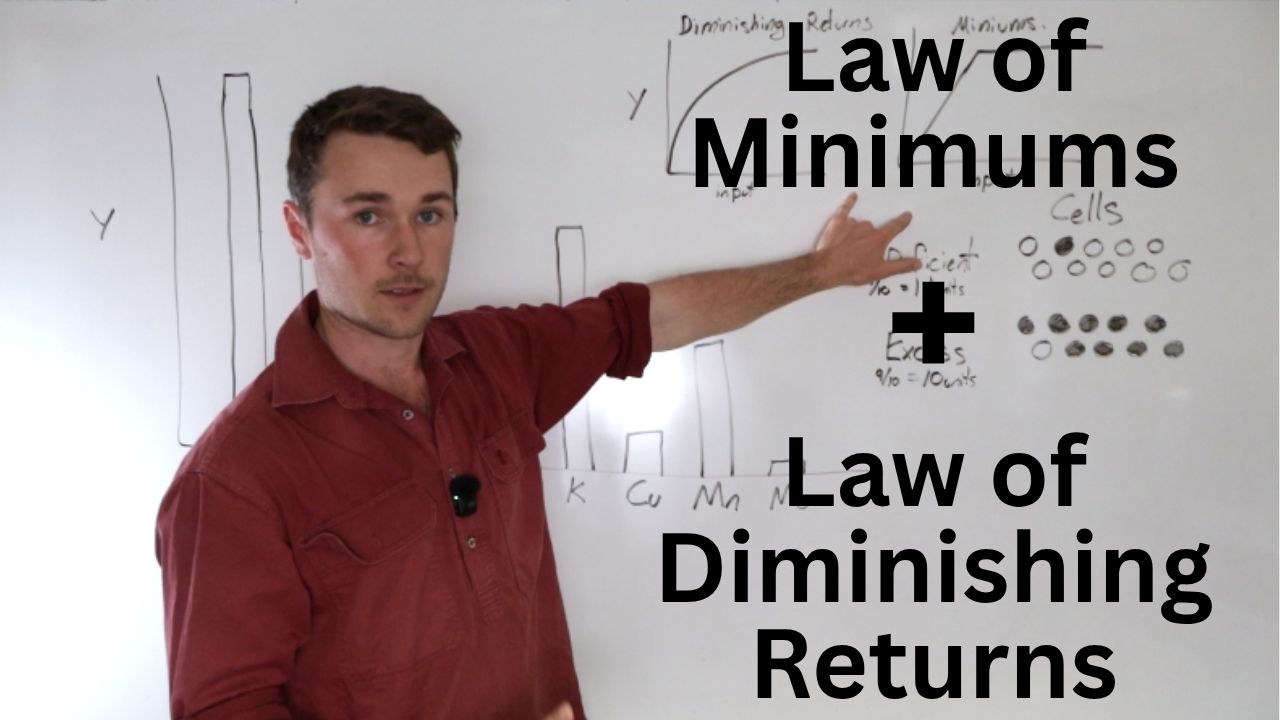
I recently got a question asking if we could quantify the burn-off of soil organic carbon when applying additional nitrogen inputs. My initial reaction was simple: just calculate the math and move on. But as I dove into the research to back it up with studies, I went down a deep biological rabbit hole and realised my original assumption was incomplete.
When you work with complex biological systems, things are rarely that simple. So, does nitrogen actually burn off your soil carbon?
First watch this video below from our YouTube channel Agresol
The Simple Math (And Why It’s Incomplete)
The conventional logic relies on carbon-to-nitrogen ratios. Typical soils sit at a 10:1 C:N ratio, while soil microbes average roughly 8:1. Because microbes are often nitrogen-limited, adding nitrogen fertiliser gives them the exact building block they need to build biomass.
To digest that nitrogen, microbes pull carbon out of your soil organic matter. As they process it, they release carbon dioxide CO2 through respiration. A basic rule-of-thumb calculation suggests that 1 kg of nitrogen could burn off or require around 30 kg of carbon. While this mechanism is real, looking at it in isolation misses the bigger picture.
Study 1: The Short-Term Carbon Loss
A study evaluating short-term nitrogen fertilisation during corn residue decomposition measured CO2 release between nitrogen-treated and untreated plots. In the first few days, the nitrogen-treated plot saw a sharp spike in CO2 emissions as microbes rapidly broke down crop litter. Over a 60-day period, the nitrogen plot resulted in a net higher release of CO2.
This suggests nitrogen speeds up carbon loss, but it raises a critical question: Is the microbes’ consumption burning labile (easily degraded) carbon that would decompose anyway, or is it degrading stable soil carbon?
Study 2: The Long-Term Carbon Gain
Another study examined nitrogen application rates in a rice-wheat rotation system. Surprisingly, increasing nitrogen application rates actually led to an increase in overall soil organic carbon.
How could two studies show completely opposite results?
Disentangling the Complexity
A comprehensive review titled “Disentangling the effects of nitrogen supply on the priming of soil organic matter“ reviewed multiple papers and identified 10 distinct pathways through which nitrogen impacts soil carbon.
The ultimate takeaway is: it depends. Nitrogen application can increase, decrease, or have a neutral effect on soil organic carbon depending on the overall farming system, existing carbon levels, and whether active plant growth is present.
Plant Biomass
The biggest piece of the puzzle missing from simple lab calculations is plant growth. Nitrogen drives photosynthesis and fuels plant biomass production. Larger plants mean deeper root systems, increased root exudates, and a higher total influx of carbon returned to the soil. In many field conditions, this increase in carbon input outweighs the carbon lost through microbial respiration.
Furthermore, research shows that while nitrogen can alter microbial diversity, the dead microbial biomass eventually settles into the soil as mineral-associated organic carbon, a stable, long-term carbon pool.
Practical Management Takeaways
Understanding soil chemistry is great, but how should you manage inputs on your farm?
Maintain target inputs: Keep applying necessary nitrogen to hit yield targets and secure economic returns for your business.
Fuel photosynthesis: Use nitrogen strategically to drive crop biomass, which acts as the primary driver for carbon inputs.
Maximize input efficiency: Combine nitrogen with humates or explore foliar applications to improve uptake and cost efficiency.
Use nitrogen strategically: Apply nitrogen intentionally to speed up high-litter residue breakdown and manage crop disease risks.
Avoid excessive soil doses: Over-applying soil nitrogen can suppress free-living nitrogen-fixing bacteria, reducing natural soil fertility.