With fertiliser prices skyrocketing, every second ad is a “magic” product promising to fix your soil health overnight . But as a regenerative consultant, I’m here to tell you something that might save your bank account: Stop trying to “fix” your soil with product applications.
It isn’t that these products don’t work; it’s that they rarely make economic sense. Here is why trying to change your soil’s chemistry via a bag is a losing battle, and how you can use plant health to do the heavy lifting for you.
The biggest obstacle to “fixing” soil is its geology and mass. In just the top 10 centimeters of a single hectare, you are dealing with roughly 1,400 tons of soil.
If you apply 20 tons of compost or biochar, which is a massive, labor-intensive application, you’ve only changed that top layer by a measly 1.4% . If you look a meter deep, you’re dealing with 14,000 tons . Soil is a geological function of its parent material; you simply cannot “product” your way out of its fundamental makeup without breaking the bank.
The Plant-Microbe-Soil Cycle
Instead of looking at the soil as a static thing to be fixed, think of it as part of a biological loop.
Plants release root exudates (liquid carbon) into the soil.
Microbes consume those exudates and convert them into stable humus .
Soil condition improves, which in turn increases microbial activity and mineral availability back to the plant .
When you focus on Plant Health, you stimulate this entire cycle for a fraction of the cost of soil-applied products . Healthy plants drive healthy soil, not the other way around .
How to Drive Soil Health via the Plant
If we want a high return on investment (ROI), we need to focus on two things: the health of the individual crop and the number of plants in the system .
1. Maximizing Photosynthesis
Anything that helps a plant pump more sugar into the ground is a win. I recommend foliar applications of:
Manganese, Magnesium, Iron, and Copper.
Nitrogen and Phosphorus (best handled in your starter program) .
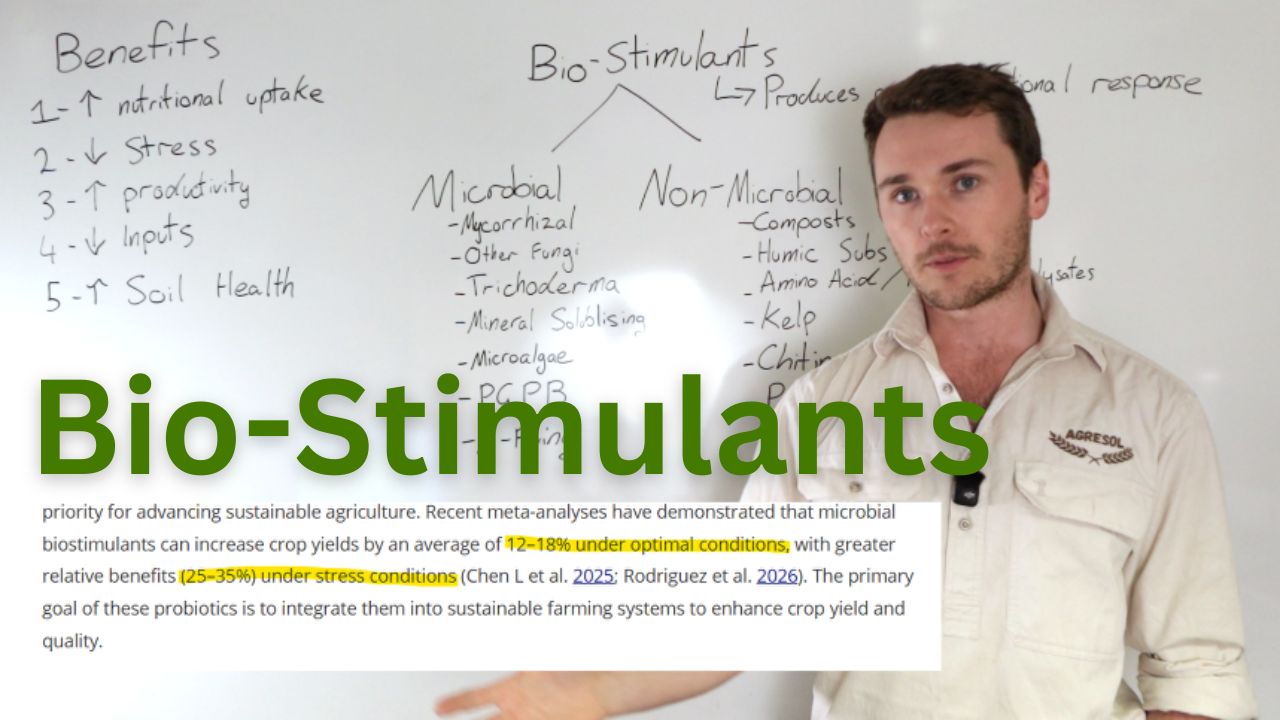
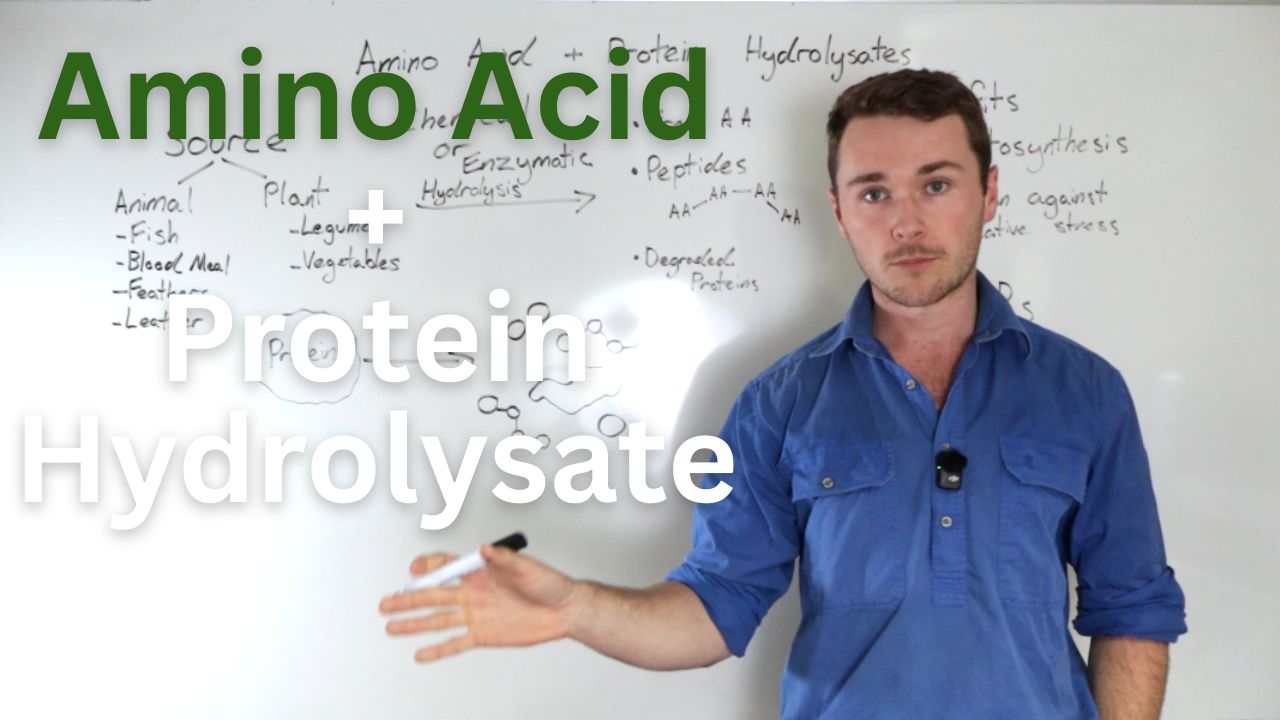
Biostimulants: Fulvic acid, kelp, and fish hydrolysate. These “kickstart” the plant and can even increase chlorophyll content .
2. Seed Treatments (Microbial Inoculants)
While it’s nearly impossible to change the microbial makeup of 1,400 tons of soil, you can change the microbes right next to the root . Adding a worm casting extract or fungi to your seed coat allows the plant to cultivate the specific biology it needs as it grows .
3. Increasing the Number of Plants
Plants are the most efficient carbon-spreaders on earth. A 10-ton crop of wheat can produce roughly 10 tons of root exudates .
Unlike compost, which sits on top, roots deliver carbon exactly where it’s needed: deep into the profile .
By using cover crops, pasture cropping, or intercropping, you keep this “carbon pump” running all year for the price of a bit of seed .
When to Make the Exception
I almost never recommend “fixing” soil with products, with two critical exceptions where the chemistry must be addressed to allow biology to work:
Lime: When pH drops below 5.5 .
Gypsum: When your Exchangeable Sodium Percentage (ESP) is greater than 6% .
The Bottom Line
Farming is a business, and every dollar you spend needs to generate a return. Trying to buy your way to healthy soil is a “money grab” that plays on your good intentions .
Focus on your plants. Keep them healthy, keep them diverse, and keep them growing as much as possible. They will build the soil for you, and they’ll do it for free .