Cover crops are a cornerstone of regenerative agriculture. They offer a wide range of environmental, economic, and productivity benefits. whether your goal is to restore soil structure, reduce chemical inputs, or support livestock, cover crops can significantly assist on your regenerative journey. Here are 12 practical ways cover crops can benefit your farm and help you build a more resilient system.
First watch the video below from our YouTube Channel (and subscribe!)
1. Weed Suppression
Weeds thrive when there’s bare ground, moisture, and nutrients with no competition. Cover crops can outcompete weeds by:
Growing dense, high-biomass canopies that block light
Drawing up nutrients and water before weeds can
Creating mulch when terminated, which smothers emerging weeds
Releasing natural allelopathic chemicals (e.g. cereal rye) to suppress germination
Best species: Sorghum, sudangrass, cereal rye, corn
2. Nitrogen Fixation
Legumes form symbiotic relationships with Rhizobia bacteria, fixing nitrogen from the atmosphere into a usable form for plants.
Up to 200 kg/ha of nitrogen can be fixed
Around 50% is released in the first year
Nitrogen in amino acid form is more efficient for plants to use
Best species: Cowpeas, sunhemp, field peas, vetch, clovers, soybean
3. Recover Nutrients
Tap-rooted cover crops absorb and retain nutrients that might otherwise leach away, especially during fallow.
Useful in high-input systems (e.g. cotton)
Prevents nutrient runoff
Translocates nutrients deeper into the soil profile
Best species: Radish, sorghum, sunflowers, safflower
4. Biofumigation
Certain brassicas release natural compounds during decomposition that suppress nematodes and soil pathogens.
Can reduce nematicide use
High-diversity cover crops also reduce disease by stimulating microbial competition
Best species: Mustards, Indian mustard, radish (with caution – can also suppress beneficial fungi)
5. Improve Soil Health
Photosynthates from cover crop roots feed soil microbes, boosting biological activity and improving soil structure.
Improves aggregation and tilth
Enhances water infiltration
Promotes long-term resilience
Best species: Diverse mixes of grasses, legumes, and broadleaves
6. Reduce Erosion
Fibrous-rooted plants help hold soil in place during heavy rain or wind events.
Prevents topsoil loss
Particularly valuable on slopes and in areas with intense rainfall
Best species: Fast-growing grasses like millet, sorghum, oats
7. Provide Lasting Residue
High-lignin species create long-lasting mulch that conserves moisture, suppresses weeds, and protects soil.
Supports fallow moisture retention
Reduces soil temperature
Can reduce herbicide requirements in the next crop
Best species: Cereal rye, sorghum, millet
⚠️ Watch your carbon-to-nitrogen ratio – high C:N residues can temporarily lock up nitrogen during decomposition.
8. Breaking Topsoil Compaction
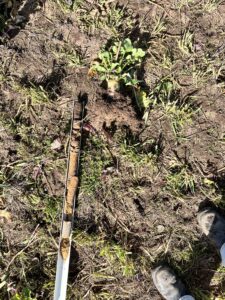
Plants with fibrous or shallow aggressive root systems help break up surface compaction (0–10 cm). The image below shows a tillage radish starting to break through some topsoil compaction left from years of tillage.
Creates aeration and pore space
Enhances root penetration for subsequent crops
Best species: Grasses (millet, oats), legumes with strong shallow roots
9. Breaking Subsoil Compaction
Deep taproots punch through hardpans and compacted layers deeper in the profile.
Improves water infiltration and storage
Increases access to deeper nutrients
Boosts drought resilience
Best species: Tillage radish, sunflower, safflower, sunhemp
10. Supplemental Grazing
Multispecies cover crops can provide high-quality, palatable forage to reduce feed costs and improve weight gain.
Some farmers report up to 2 kg/day gain in steers
Great way to monetise cover crops through grazing
Best species: Sorghum, sudangrass, cowpeas, millet, mung beans (avoid unpalatable species like mustard)
11. Attracting Beneficial Insects
Flowering cover crops can support beneficial predator insects that reduce pest pressure.
Important in horticulture and broadacre systems alike
Supports integrated pest management (IPM)
Best species: Buckwheat, phacelia, sunflowers, linseed
12: Mycorrhizal Fungi Growth
Most crops benefit from mycorrhizal fungi associations that help with nutrient and water uptake. Avoid non-host species like brassicas.
Best species: Linseed, legumes, most grasses (avoid brassicas and mustards)