Regenerative Manganese Management
We find manganese to be often deficient when looking at crops which tends to be correlated with lower photosynthetic rates. It’s often one of the first minerals we correct in regenerative farming systems because it underpins so many fundamental processes, from photosynthesis and carbohydrate production to disease resistance and nutrient balance.
Despite its abundance in most soils, manganese deficiency is surprisingly common. This usually isn’t because soils lack manganese, but because modern farming practices, such as excessive tillage, herbicide use, and liming, push it into unavailable oxidised forms. The result? Plants struggle to photosynthesise efficiently, convert nitrogen into proteins, and regulate other nutrients like potassium and calcium.
In this article, we’ll explore how manganese functions in plants and soils, how to accurately test for it, what practices commonly reduce its availability, and most importantly, how to manage manganese regeneratively. By understanding and balancing this vital mineral, we can enhance plant resilience, improve photosynthetic efficiency, and rebuild soil function for long-term productivity.
First watch the video below from our youtube channel Agresol (And Subscribe!)
Function of Manganese in Plants
Manganese (Mn) is an essential trace element that drives several of the most important biochemical reactions in plants. Although required only in small amounts, it plays a critical role in photosynthesis, energy transfer, and plant defence. In regenerative agriculture, we focus on manganese early because it directly influences the plant’s ability to produce carbohydrates, the foundation of plant growth, soil carbon exudation, and overall system health.
1. Photosynthesis and the Oxygen-Evolving Complex
One of manganese’s most important roles is within the oxygen-evolving complex of photosystem II, the stage of photosynthesis where water is split into hydrogen, oxygen, and electrons. These electrons fuel the light reactions of photosynthesis, driving the production of sugars that feed both the plant and soil microbes.
Without adequate manganese, this step slows down dramatically, reducing photosynthetic efficiency by up to 50%. As a result, plants struggle to build carbohydrates, weakening their energy base and reducing resilience to stress.
2. Antioxidant Protection and Stress Tolerance
Manganese is also a key component of manganese superoxide dismutase (Mn-SOD), one of the plant’s major antioxidant enzymes. This enzyme captures and neutralises reactive oxygen species (ROS) that build up under stress from heat, drought, or excess light.
By buffering oxidative stress, manganese helps plants maintain higher productivity under challenging environmental conditions, a vital function as we move toward more resilient, regenerative systems.
3. Disease Resistance and Lignin Production
Manganese activates several enzymes involved in lignin formation and detoxifying fungal toxins. Lignin strengthens plant cell walls, forming a physical barrier that makes it harder for pathogens to invade. This is why manganese-deficient plants are often more prone to fungal diseases such as take-all in cereals.
Healthy manganese levels also support the oxidase enzymes that inhibit fungal toxins, helping the plant resist infection without relying on chemical protection.
4. Secondary Metabolites and Plant Quality
Manganese is integral to the shikimate pathway, the biochemical route responsible for producing secondary metabolites like flavonoids, phenolics, and aromatic amino acids. These compounds determine the flavour, aroma, and nutritional quality of crops. Interestingly, this is the very pathway inhibited by glyphosate (Roundup), which helps explain why conventional systems often see reduced crop flavour and resilience. In regenerative systems, adequate manganese supports richer secondary metabolism, improving both crop quality and pest resistance.
5. Nutrient Interactions and Potassium Regulation
Manganese also regulates the proton pumps that control cation balance, including potassium uptake. When manganese is deficient, potassium can accumulate excessively or become unavailable, leading to imbalances with calcium and magnesium. By maintaining proper manganese levels, plants better regulate nutrient uptake and maintain strong cell integrity.
6. Carbohydrate and Protein Synthesis
Through its impact on photosynthesis, manganese boosts carbohydrate production. These carbohydrates are vital not only for plant growth but also for converting ammonium nitrogen into amino acids and complete proteins. This process reduces excess ammonium in plant tissue, which otherwise attracts pests and pathogens, and drives healthier, more productive crops.
Testing for Manganese
Accurate testing is essential for understanding whether manganese is limited by total supply, soil chemistry, or biological availability. Because manganese exists in multiple oxidation states, only one of which (Mn²⁺) is plant-available, a simple soil test rarely tells the full story. In regenerative management, we look at manganese from three angles: total soil reserves, available manganese, and actual plant uptake.
1. Total Soil Manganese
The total manganese test measures all the manganese in your soil, including what’s locked up in minerals and unavailable forms. This test only needs to be done once, as total levels change very little over time and mostly reflect your parent material.
We like to see total manganese above 200 parts per million (ppm). If levels are lower than this, it may indicate a naturally manganese-poor parent material, and a one-off soil application of manganese (usually as manganese sulphate) may be worthwhile to build long-term reserves.
2. Available Manganese
Available manganese tests measure the portion of manganese that is currently soluble and theoretically accessible to plants. However, because manganese availability fluctuates rapidly with changes in soil oxidation–reduction (redox) conditions, these numbers should be interpreted with care.
Manganese exists in several forms — Mn²⁺ (available), Mn³⁺, and Mn⁴⁺ (unavailable). Oxidising conditions, high pH, or dry, well-aerated soils can quickly shift Mn²⁺ into the unavailable forms, while reducing, biologically active, and slightly acidic conditions favour the available Mn²⁺.
For most soils:
Sandy soils: aim for around 15 ppm available Mn
Clay soils: around 25 ppm
On a Haney Soil Test, a value around 20 ppm is a good target.
3. Plant Uptake (Differential Sap Testing)
Soil tests alone don’t confirm whether manganese is reaching the plant. That’s why we also use differential sap testing, which measures mineral concentrations in both the youngest and oldest leaves. This shows how efficiently the plant is translocating nutrients from roots to new growth and helps identify hidden deficiencies before symptoms appear.
For manganese, we’re looking for less than a 10% variation between old and young leaves. Greater variation suggests that manganese supply from the soil has slowed, often due to shifts in redox potential, drying soils, or oxidation following herbicide or nitrate applications.
4. Visual Symptoms
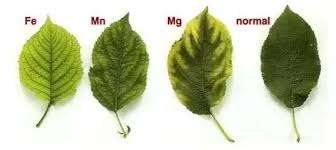
In the field, manganese deficiency shows as interveinal yellowing on the youngest leaves, similar to magnesium deficiency but appearing on the new growth rather than the old. Because manganese is immobile in plants, once a leaf becomes deficient, it can’t draw manganese from older tissue, making continuous soil supply essential.
Practices That Reduce Manganese Availability
Even though manganese is the 10th most abundant element in the Earth’s crust, many farms still experience manganese deficiency because management practices push manganese into unavailable oxidised forms. Understanding which actions reduce manganese availability helps us modify or balance them within a regenerative framework.
Manganese is available to plants primarily in its reduced form (Mn²⁺). When the soil becomes oxidised, manganese shifts into Mn³⁺ and Mn⁴⁺, which are unavailable to plants. These redox changes can occur within hours depending on moisture, oxygen, and microbial activity. Below are the key practices that commonly drive manganese into an unavailable state.
1. Over-Liming
Applying excessive lime raises soil pH and oxidises the soil environment, pushing manganese from Mn²⁺ into its oxidised, unavailable forms. While liming is often necessary to correct acidity, too much can quickly trigger a manganese deficiency.
To balance both outcomes:
Apply smaller, more frequent lime applications rather than large single doses.
Avoid exceeding 4 tonnes per hectare, unless correcting severe acidity.
Where manganese toxicity exists (very low pH <4.5), lime can help reduce soluble manganese levels.
2. High Nitrate or Urea Fertilisers
Nitrate-based fertilisers have an oxidising effect on the soil. As nitrification occurs, oxygen is released, which shifts manganese into unavailable forms. Urea has a similar effect after it converts into nitrate in the soil.
Repeated use of nitrate fertilisers also suppresses the soil biology that maintains reducing conditions, further limiting manganese availability.
3. Tillage
Tillage exposes soil to oxygen and destroys aggregation, both of which promote oxidation. Once soil is opened up, Mn²⁺ rapidly converts to Mn³⁺/Mn⁴⁺, and plant availability drops.
While complete removal of tillage isn’t always practical, it helps to:
Minimise deep or aggressive tillage.
Use shallow or strategic tillage only where necessary.
Offset its oxidising effects by maintaining groundcover or adding biological stimulants post-till.
4. Herbicide Use (Especially Glyphosate)
Glyphosate (Roundup) is a strong chelator of manganese. It binds manganese in both the soil and plant tissue, preventing uptake and enzyme activation. Glyphosate also disrupts the shikimate pathway, the biochemical route manganese helps drive, reducing plant secondary metabolites, flavour, and disease resistance.
Reducing herbicide frequency, rotating chemistry, or integrating cover crops to suppress weeds can significantly improve manganese cycling.
5. Bare Soil Exposure
Bare ground exposes the soil to sunlight and oxygen, creating an oxidising environment that depletes Mn²⁺. It also halts root exudation and microbial respiration, two of the key processes that maintain reducing conditions. Continuous cover through cover crops, relay cropping, or residue retention are effective ways to keep manganese available naturally.
6. High Manure Applications
While manures are often valuable for organic matter and phosphorus, high rates, especially from poultry or pig sources, can increase oxidation and reduce manganese availability. Moderating manure use or combining it with carbon-rich residues helps maintain balance.
Fertiliser Options for Correcting Manganese Deficiency
When manganese levels are low, the goal is to restore plant access without overcorrecting or locking it up again through oxidation. Because manganese shifts rapidly between available and unavailable forms depending on redox conditions, fertiliser management should focus on both the form of manganese applied and the conditions that keep it reduced (Mn²⁺).
Below are the most effective fertiliser options and strategies for correcting manganese deficiency.
1. Manganese Sulphate (MnSO₄)
Manganese sulphate is the most common and effective form of manganese fertiliser. It provides readily available Mn²⁺ that plants can absorb immediately through either soil or foliar application.
Soil application: Best used when total manganese reserves are low (below 200 ppm on a total soil test). Apply at modest rates to build long-term reserves rather than as a quick fix.
Foliar application: Ideal when soil tests show adequate manganese but sap tests reveal low plant uptake. Foliar feeding bypasses soil redox issues and gives an instant boost to photosynthetic function.
To improve efficiency and reduce oxidation on the leaf surface, always apply manganese sulphate with fulvic acid or another organic chelator.
2. Chelated Manganese Products
Chelated manganese (Mn-EDTA, Mn-amino acid, or Mn-fulvate) remains soluble longer than unchelated forms, improving uptake under challenging conditions.
Chelated forms are most useful in alkaline or sandy soils where manganese quickly oxidises or leaches.
For regenerative systems, fulvate or amino acid chelates are preferred over synthetic EDTA products because they’re biodegradable and feed beneficial soil biology.
Regenerative Practices That Increase Manganese Availability
Correcting manganese deficiency isn’t just about applying fertiliser, it’s about rebuilding the soil environment that keeps manganese in its reduced, plant-available Mn²⁺ form. Regenerative management focuses on creating biologically active, well-aggregated soils that maintain stable redox conditions, rather than swinging between oxidation and reduction. This stability ensures manganese remains available naturally, reducing the need for ongoing inputs.
Below are the key regenerative practices that improve manganese availability over time.
1. Build Soil Aggregation and Structure
Healthy soil aggregation is one of the strongest indicators of good manganese cycling. Aggregates create micro-zones with lower oxygen levels where Mn²⁺ remains stable and accessible.
You can improve aggregation through:
Living roots year-round – continuous carbon flow feeds soil microbes that build organic glues (polysaccharides) and humus.
Reduced disturbance – minimal tillage preserves soil pore structure and prevents oxidation of reduced zones.
Balanced nutrition – ensuring adequate calcium, magnesium, and biological activity to support stable aggregates.
The result is a soil with both well-aerated pores for gas exchange and small anaerobic pockets that stabilise manganese in its reduced state.
2. Increase Root Exudation and Soil Carbon Flow
Plants release up to 40–80% of their photosynthates as root exudates. These sugars and organic acids fuel soil microbes that naturally reduce manganese oxides back to Mn²⁺.
Practices that promote root exudation include:
Maintaining green cover between cash crops.
Using diverse species mixes to stimulate a wider range of microbial activity.
Avoiding chemical stressors that reduce photosynthesis, such as excessive nitrogen or herbicide use.
- Increasing photosynthesis with foliar applications of Mg, Mn, Fe, Cu and P
A biologically active rhizosphere acts as a “manganese battery,” continuously recharging the available pool for plant uptake.
3. Use Cover Crops and Diverse Rotations
Cover crops are one of the most effective tools for regenerating manganese availability. They:
Maintain reducing conditions in the soil through constant respiration.
Feed manganese-reducing microbes.
Prevent oxidation by protecting the soil from direct sun and air exposure.
Including functional groups such as legumes, grasses, and brassicas improves both carbon flow and mineral cycling. Over time, cover cropping can reduce the need for manganese fertiliser applications entirely.
4. Encourage Biological Reduction
Certain soil microbes, including manganese-reducing bacteria and fungi, play a direct role in converting unavailable Mn³⁺ and Mn⁴⁺ forms into Mn²⁺.
To encourage them:
Apply biological inoculants such as compost teas, worm castings, or microbial primers.
Avoid practices that harm microbial populations, such as heavy nitrate fertiliser use or repeated glyphosate applications.
Maintain organic matter to provide the carbon energy these microbes require for manganese reduction.
A balanced microbial community ensures a constant cycle of reduction and release, stabilising manganese for plant uptake.
5. Reduce Oxidising Inputs and Practices
Every time the soil is exposed, tilled, or treated with oxidising fertilisers or herbicides, manganese availability declines. Regenerative systems aim to limit these stressors:
Replace nitrate-based nitrogen sources with ammonium or amino acid forms.
Minimise tillage or use shallow, timed passes.
Transition from bare fallows to living mulches or intercropping.
Even partial reductions in these oxidising influences can lead to measurable improvements in manganese uptake.
6. Enhance Soil Organic Matter and Redox Stability
Soil organic matter not only feeds microbes but also helps “poise” the soil, meaning it buffers rapid redox changes that would otherwise swing manganese between available and unavailable forms.
As soil organic matter increases, manganese availability becomes more consistent throughout the season. Practices like rotational grazing, compost additions, and multi-species cover cropping accelerate this process.
Conclusion
Manganese may only be needed in trace amounts, but its influence on plant health, productivity, and resilience is enormous. From driving photosynthesis and carbohydrate production to strengthening plant defences and regulating other nutrients, manganese sits at the core of a well-functioning biological system.
Yet, it’s not the total amount of manganese in the soil that matters most, it’s whether that manganese remains in the reduced, plant-available Mn²⁺ form. Practices such as heavy liming, frequent tillage, nitrate fertilisers, and herbicide use can quickly oxidise manganese and restrict its availability, even in manganese-rich soils.
Regenerative management reverses this by rebuilding soil aggregation, feeding biology, maintaining living roots, and creating stable redox conditions. When combined with targeted fertiliser support, like foliar manganese sulphate with fulvic acid, these practices restore natural manganese cycling and long-term soil function.
The goal isn’t simply to fix a deficiency but to build a self-sustaining system where plants, microbes, and minerals work together. By managing manganese regeneratively, we strengthen the foundation of photosynthesis, resilience, and nutrient balance, leading to healthier crops, healthier soils, and more profitable farming systems.