For nearly a third of farmers in Australia, sodium is a major limitation to productivity. While many plants can utilize a small amount of sodium for osmoregulation or specific photosynthetic pathways, in most agricultural contexts, excess sodium is a primary driver of soil degradation.
At Agresol, we help farmers transition from simply “living with” sodic soils to actively regenerating them. Here is how we manage the unique challenges of high-sodium environments.
First, watch the video below from our Youtube channel Agresol (and make sure to subscribe!)
Understanding the Difference: Saline vs. Sodic
It is common to confuse salinity with sodicity, but the distinction is vital:
Salinity: Refers to total dissolved salts in the soil water.
Sodicity: Refers specifically to the amount of sodium attached to the clay particles (the clay colloid).
We measure this using the Exchangeable Sodium Percentage (ESP). When your ESP rises above 6%, the soil is classified as sodic. At this level, the physical structure of your soil begins to collapse.
Why Sodium Destroys Soil Structure
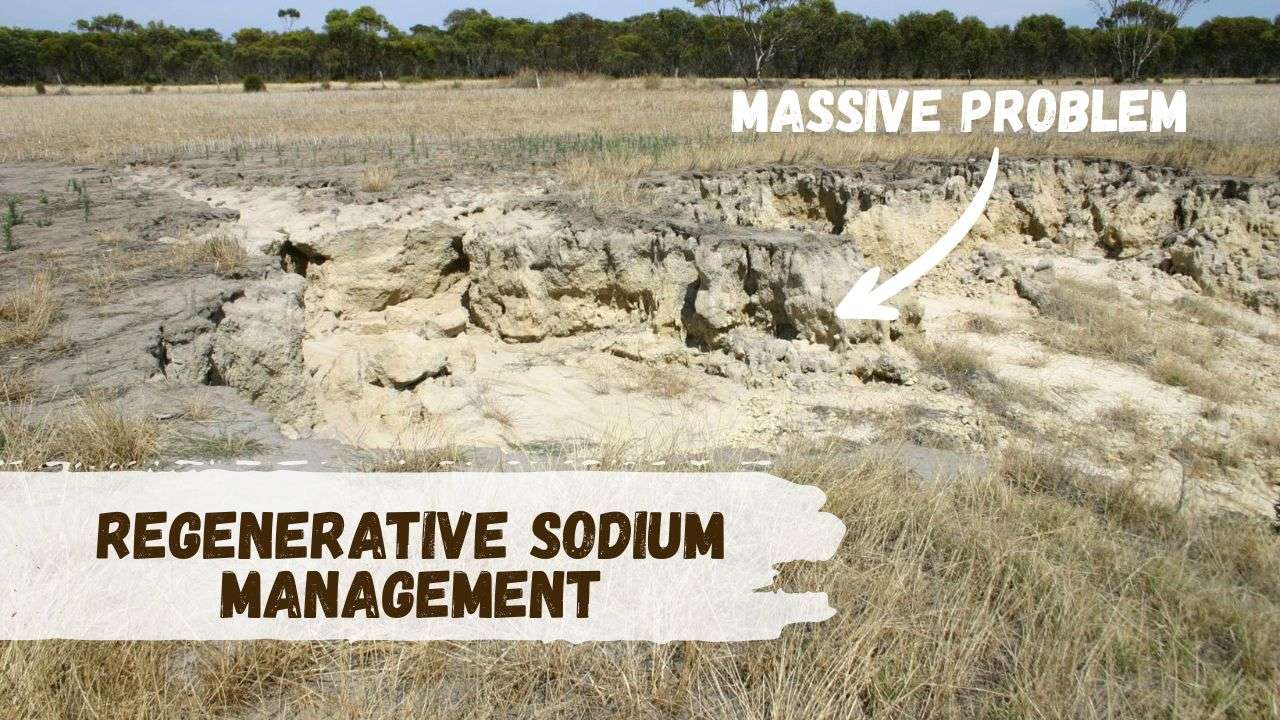
Sodium is a large, “hydrated” ion. Unlike calcium, which helps stick soil particles together (flocculation), sodium acts like a wedge. It pushes clay particles apart, leading to a process called dispersion.
The consequences of dispersion include:
Surface Crusting: A hard layer forms on top of the soil, preventing seed emergence.
Poor Infiltration: Water cannot penetrate the soil profile, leading to runoff and erosion.
Oxygen Deprivation: When soil pores collapse, biology “suffocates,” halting the beneficial microbial activity needed for nutrient cycling.
The Nutrient Tug-of-War
Sodium doesn’t just ruin soil structure; it also interferes with plant chemistry. Because sodium is a cation, it competes directly with Potassium and Calcium for uptake.
If sodium levels are high, your plants may show signs of potassium deficiency even if your soil tests show adequate potassium levels. In a regenerative system, we look at these ratios to ensure the plant isn’t “over-drinking” sodium at the expense of its health.
Regenerative Strategies for Sodium Management
1. The Calcium Displacement (Gypsum)
The most common “fix” for sodic soil is the application of Gypsum (Calcium Sulfate).
How it works: The calcium in the gypsum “knocks” the sodium off the clay colloid. The sulfate then binds with the displaced sodium to form sodium sulfate, which can be leached out of the root zone with rainfall or irrigation.
2. Building Organic Carbon
While gypsum provides the chemical fix, Organic Matter provides the biological glue. Increasing soil carbon helps buffer the effects of sodium and improves soil porosity. This allows for better water infiltration, which is essential for leaching that displaced sodium away.
3. Cultural and Species Selection
If you are dealing with a “parent material” problem, where the soil is naturally and deeply sodic, management must change.
Tolerant Crops: Switching to salt-tolerant species like barley or specific C4 grasses can maintain productivity while you build soil health.
Permanent Pastures: For highly sodic areas where cropping is no longer profitable, converting to permanent pasture is often the most sustainable long-term solution. This keeps the soil covered, increases infiltration, and prevents the “wicking” of salts to the surface.
Summary
Managing sodic soils is about restoring the physical and chemical balance of your land. By using small, strategic applications of amendments like gypsum and prioritizing soil organic carbon, you can turn dispersive, “tight” ground into a productive, porous ecosystem.