Transitioning to regenerative agriculture is a journey that requires a strategic, step-by-step approach rather than a sudden leap. A common mistake for those just getting started is jumping straight into cutting out inputs. While reducing inputs is a long-term goal, doing so before your biological system is built up can lead to significant yield losses.
Maintaining yield is critical because it drives profit and is directly proportional to biomass production. Higher biomass leads to increased photosynthesis, more root exudates, and increased ground cover, all of which help cycle carbon back into the soil. The most effective path forward is to optimize, rather than simply slash, your inputs while working with natural biological systems.
Phase 1: Comprehensive Soil Diagnostics
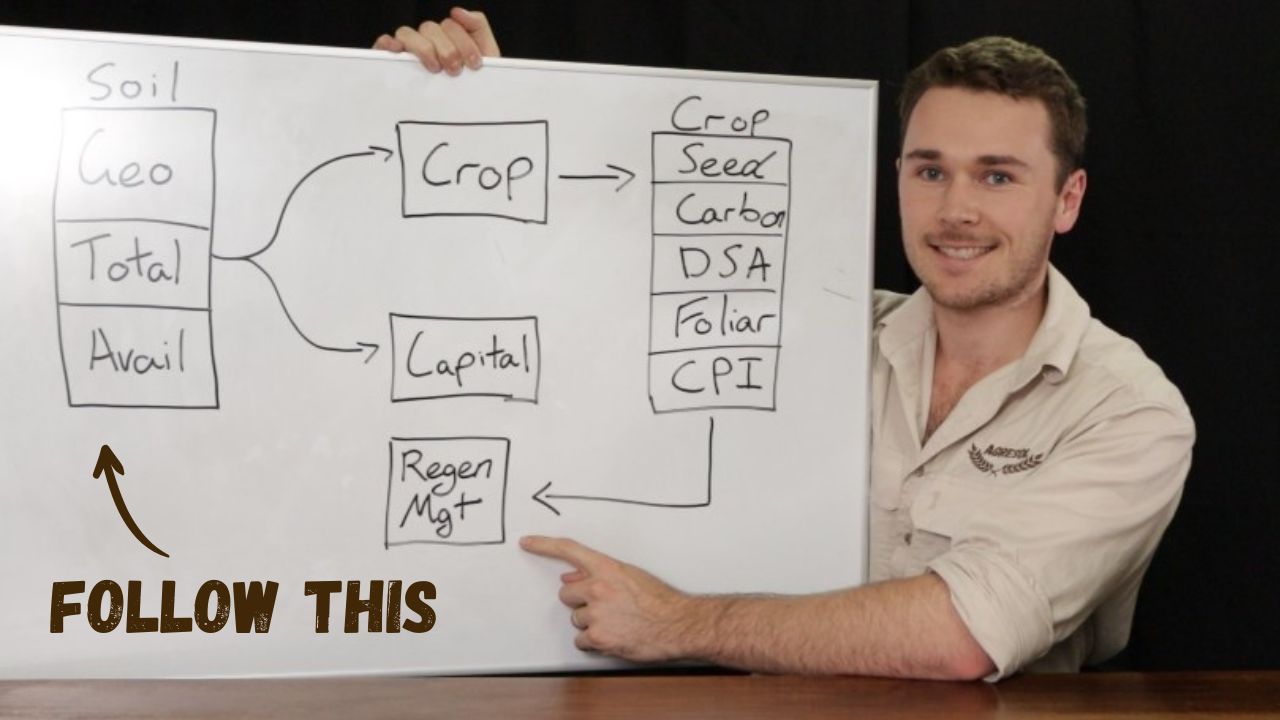
The first component of a successful transition is a deep understanding of your soil’s nutrient stock.
1. Identify Surface Geology
Your farm’s surface geology determines its primary soil characteristics. For instance, granite-based soils often have high sand content and lower nutrition, while siltstone-based soils may present pH and aluminum challenges. Understanding these geological units allows you to zone your farm and determine precise sampling locations.
2. Take a Total Soil Test
A total soil test (or pseudo-total) reveals 80% to 90% of the minerals physically present in your parent material. This test is essential because biology can only release minerals that are already in the soil.
Limiting Factors: If a mineral like copper is missing from the total component, you will likely need to supplement it.
Phosphorus Reserves: You may discover you have thousands of parts per million of phosphorus in your total component, which informs whether you need to add more or simply find ways to release what is already there.
3. Available Soil Test and Properties
In addition to totals, conduct a standard soil test to measure available minerals and soil limitations such as pH and Electrical Conductivity (EC). This information, along with base saturation, helps inform necessary soil alleviation measures, such as liming or gypsum applications.
Phase 2: Strategic Nutritional Planning
Once diagnostics are complete, nutritional recommendations are divided into two categories: Crop Requirement and Capital Requirement.
Crop Requirement: This covers what the crop needs this specific season (e.g., Nitrogen, Phosphorus, Sulfur, Potassium) based on removal rates.
Capital Requirement: These recommendations build up long-term soil reserves. For example, if phosphorus levels are below the critical threshold for maximum yield, you can space out capital applications over several years to reach that target.
Soil Alleviation: This involves fixing physical limitations, such as applying lime for low pH (below 5.5) or gypsum for high sodium (exchangeable sodium percentage greater than 6%).
Phase 3: Regenerative In-Season Practices
The growing season is the time to implement regenerative “touch-ups” that improve the system without drastic changes.
1. Biological Seed Treatments
Give your plants a head start by treating seeds with biology, such as worm casting extracts, microbes, or fungi. Mycorrhizal fungi are particularly effective for assisting with phosphorus uptake.
2. Carbon-Buffered Fertilizers
Add a carbon source, such as humic acid, to all high-analysis synthetic fertilizers. This buffers the salt index to protect microbes and reduces nutrient losses through leaching or volatilization.
3. Differential Sap Analysis and Foliars
A few weeks into the season, use a differential sap test to compare younger and older leaves. This tells you exactly what the plant is picking up and translocating, allowing you to create targeted foliar applications.
Bypassing Soil Issues: Foliar applications bypass chemical or biological blocks in the soil, delivering nutrition directly to the plant to increase photosynthesis.
Critical Points of Influence: Target specific minerals needed at key stages, such as applying copper for pollen viability during the pollination stage to increase yield.
Moving Toward Large-Scale Management
By getting the nutrition component right in the first year, you build a biological base and maintain yields. Once this foundation is stable, you can confidently move into larger regenerative management changes, such as cover cropping, intercropping, or livestock integration.