Soil fungi are a cornerstone of farm regeneration, playing a critical role in soil health, plant resilience, and overall productivity. Understanding how to manage these microscopic organisms allows you to move away from high-input dependency toward a self-sustaining biological system.
What are Soil Fungi?
Soil fungi are complex, plant-like organisms. While they share similar cell structures with plants, they are distinct organisms that grow in thin, thread-like structures called hyphae. As these hyphae grow, they form a vast network known as a mycelium. This fungal network serves as the “internet” of the soil, providing essential functions that drive the entire ecosystem.
The Three Major Lifestyles of Fungi
Soil fungi generally fall into three functional categories:
Saprophytes (The Decomposers): These fungi specialize in breaking down complex organic compounds like cellulose, lignin, and proteins. They are essential for decomposing crop residues—such as stubble and roots—and turning them into simple compounds that build humus and soil organic matter. Crucially, saprophytes are independent and do not require a living plant to survive.
Mutualists (The Symbiotes): These fungi require a living plant to thrive. In this symbiotic relationship, both the fungi and the plant benefit directly.
Mycorrhizal Fungi: These form a connection within the plant roots, effectively acting as a root extension that can explore the soil profile up to half a meter away to bring back water and nutrients.
Endophytic Fungi: These live entirely within the plant tissue, producing growth-promoting hormones and defense compounds
Pathogens (The Disease-Causers): Pathogens consume plant tissue and cause diseases. They are categorized as soilborne (causing wilts and rots like Fusarium or Verticillium) or airborne (such as rusts and mildews).
Fungi and Epigenetics
One of the most fascinating aspects of soil fungi is their ability to switch between these roles. A fungus is not always a “bad guy” or a “good guy” by default; its behavior is often determined by its environment through a process called epigenetics.
For example, Fusarium is typically viewed as a soilborne pathogen. However, in a soil with high organic carbon where plants are releasing high-quality root exudates, Fusarium can switch into a saprophytic lifestyle, benefiting the plant by increasing nutrient cycling instead of attacking it. Similarly, pathogens that cause leaf spot can express themselves as mutualists in the right environment, directly helping the plant.
The Massive Benefits of Fungi
1. Building Soil Health and Structure
Saprophytic fungi are primary drivers of Soil Organic Matter (SOM) and humus. This buildup improves soil aggregation and structure, leading to better water infiltration and gas exchange.
2. Precision Nutrient Cycling
Fungi are highly efficient at cycling nutrients. They typically have a carbon-to-nitrogen (C:N) ratio of 15–30:1. When they consume bacterial biomass (which has a C:N ratio of 4:1), they end up with excess nitrogen, which they release back into the soil for plant use. They also release enzymes and acids that unlock phosphorus, potassium, and zinc from the parent material.
3. Plant Performance and Drought Resilience
Mycorrhizal fungi can increase the effective surface area of a root zone by 1,000x. While plant roots are limited in their ability to pull water from dry soil, fungal hyphae are small enough to break surface tension in tiny soil pores. While roots struggle at -1.5 megapascals of pressure, fungi can continue to supply water to the plant at pressures as low as -4 megapascals.
4. Biological Predation and Balance
Certain fungi act as predators, hunting down pathogens, nematodes, and other microbes to keep the soil food web in balance. The goal isn’t to eradicate pathogens but to use these predators to keep them below an economic threshold. Trichoderma is a prime example of a predatory fungus that can also switch to a mutualist role to upregulate plant defense genes.
Managing Diseases Without Fungicides
To manage fungal diseases, we must address the Disease Triangle: the pathogen, a susceptible host, and a favorable environment.
Convert the Pathogen: Increase plant health and photosynthesis to release high-quality root exudates, encouraging pathogens to switch to saprophytic or mutualistic lifestyles.
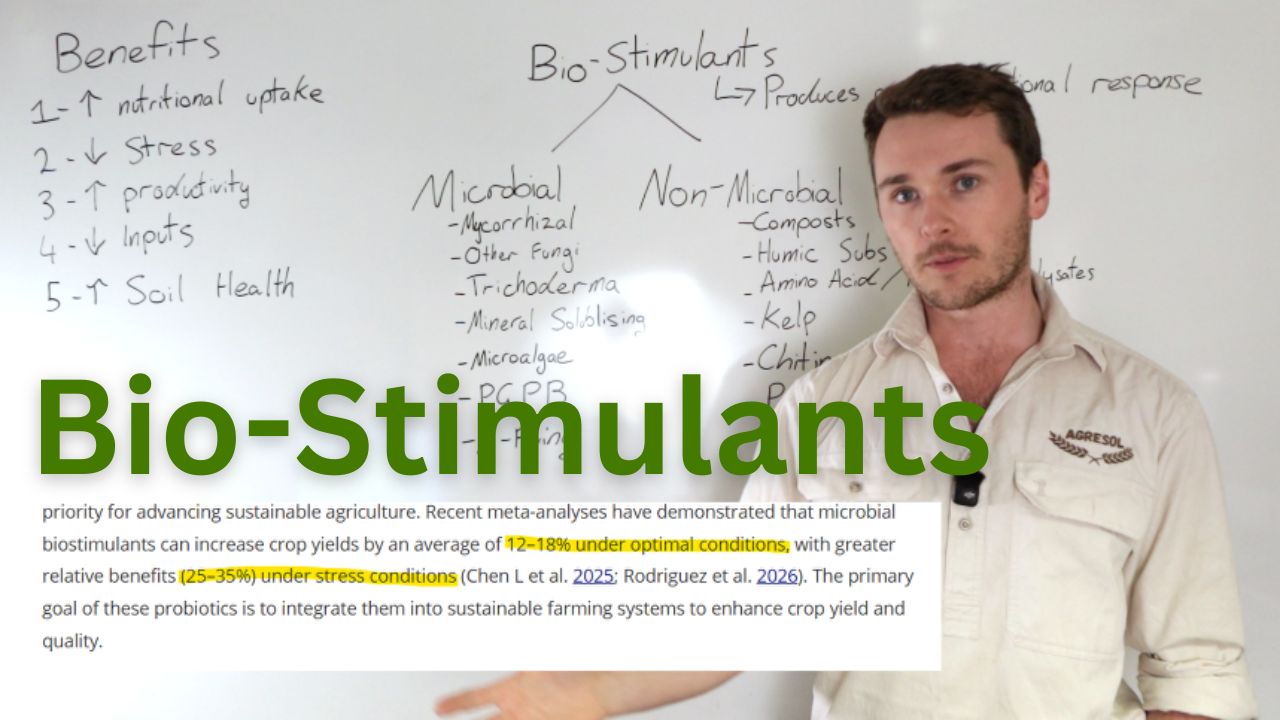
Biological Protection: Use inoculants like Trichoderma or Bacillus to hunt pathogens or prime the plant’s immune system.
Strengthen the Host: Balanced nutrition is key.
Cell Wall Integrity: Use Calcium, Silica, and Boron to build physical barriers against infection.
Immune Triggers: Sulfur can trigger “sulfur-induced resistance”.
Nitrogen Balance: Excess nitrogen can dilute minerals and weaken the plant, making it more susceptible to rusts and mildews
Alter the Environment: Fungal pathogens thrive in acidic, oxidized environments. Using nutrition and microbes to shift the soil or leaf environment toward a slightly reduced state can make it unfavorable for disease.
Why Our Current Systems Struggle with Fungi
Many modern agricultural practices are inadvertently “anti-fungal”:
Soil Disturbance: Tillage is the most damaging practice, as it physically shreds fungal networks.
High-Salt Fertilizers: These can chemically burn microbes and fungi.
Phosphorus Overload: High levels of available phosphorus can inhibit mycorrhizal colonization because the plant “decides” it doesn’t need to pay the carbon cost for the fungal network.
Fallows: Mycorrhizal fungi populations begin to decline after just two weeks without a living plant root, leading to “long fallow disorder”.
The Road to Fungal Recovery: A 3-Step Strategy
We use the ROOTS framework to help farmers reinstate their fungal populations:
Optimize: Take small steps to increase efficiency. Add humic acid to starter fertilizers to buffer salts, or use older crop varieties that produce more biomass and root exudates.
Outsource: Move toward biologically friendly inputs. Switch from high-analysis phosphorus to guano, and use seed treatments like mycorrhizal inoculants, worm casting extracts, or Trichoderma.
Transform: Change the overall farm system. Implement cover crops, intercropping, or pasture cropping to provide a continuous supply of carbon and diversity to the fungal community.